
Key takeaways
- Steel and composite toe caps can both pass the same toe-impact and compression tests; the difference is weight, thickness, temperature and metal content.
- Composite (non-metal) toe caps suit airports, electrical work and cold environments; steel is thinner and usually cheaper.
- Under EN ISO 20345:2022 the puncture marking now tells you the plate type: P for metal plates, PS or PL for non-metal inserts.
The toe cap is the part of a safety shoe buyers ask about first. Both main materials protect the foot; they suit different workplaces and price points.
1. Side-by-side comparison
| Steel toe cap | Composite toe cap | |
|---|---|---|
| Material | Steel | Non-metal (fibreglass, carbon fibre, plastic composites) |
| Weight | Heavier | Lighter |
| Thickness for the same protection | Thinner, more toe room | Thicker, needs a roomier toe shape |
| Metal detectors | Triggers them | Metal-free option |
| Cold and heat | Conducts temperature | Insulates better |
| Electrical work | Conductive metal | Non-conductive |
| Cost | Usually lower | Usually higher |
2. What the standards require
A safety toe is tested by impact and compression, not by material. In Europe, EN ISO 20345 safety footwear must protect against a 200 J impact and 15 kN compression. In the USA, ASTM F2413 rates toe protection as I/75 and C/75. A well-made composite cap and a steel cap can both meet these levels — check the test report of the exact model, not the material.
3. Anti-puncture midsoles: steel or textile
The same choice exists under the foot. Steel plates are thin and rigid; textile inserts (often called Kevlar or aramid) are flexible, lighter and cover more of the sole. The 2022 edition of EN ISO 20345 split the puncture marking: P now means a metal plate, while non-metal inserts are tested with a thinner or thicker nail and marked PS or PL (so S3 becomes S3S or S3L).
4. Which to choose for which customer
- Warehouses and logistics: lightweight sneaker styles with a flexible textile midsole — comfort drives repeat orders.
- Airports, security, electricians: metal-free composite toe and textile midsole.
- Construction and heavy industry: steel toe boots are still the price-performance standard.
- Cold stores and outdoor winter work: composite toe caps feel less cold.
5. In our range
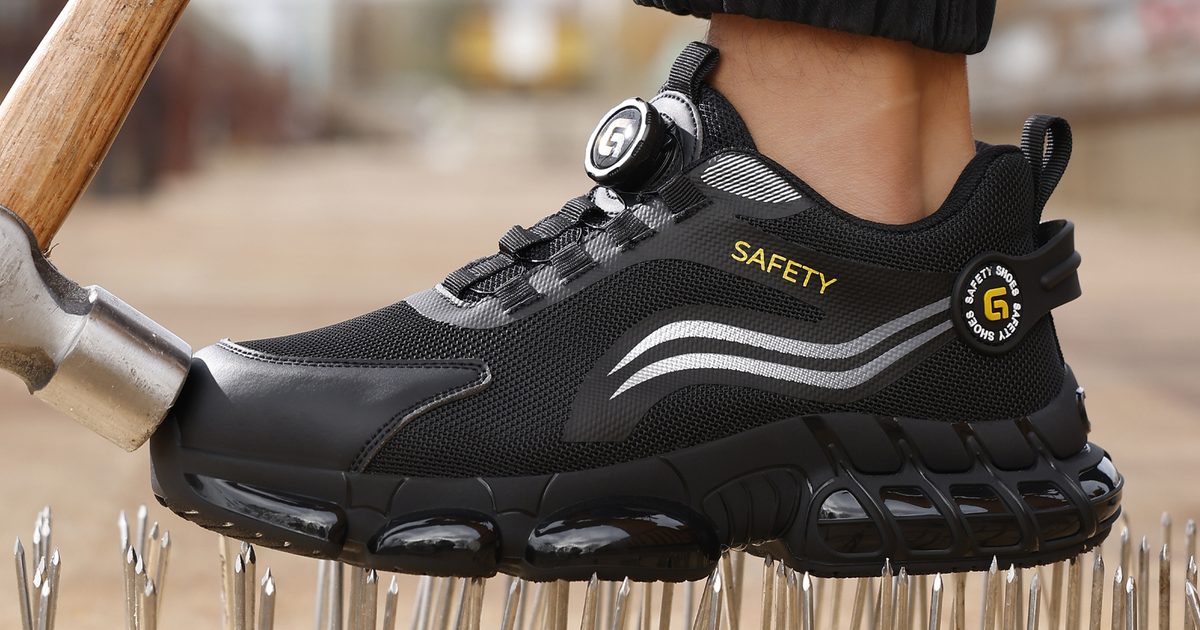
Our model 0292 knit safety sneaker and every other model in our range use a composite (non-metal) toe cap with a flexible Kevlar anti-puncture midsole (factory spec for 0292: ≥1100 N) and a wear-resistant TPU outsole — a light build that keeps the toe and sole insert free of metal. See the full catalog.
Sources
Talk to a safety shoe factory
Send your models, quantities and target market — Rachel replies with FOB prices, stock and MOQ within one business day.